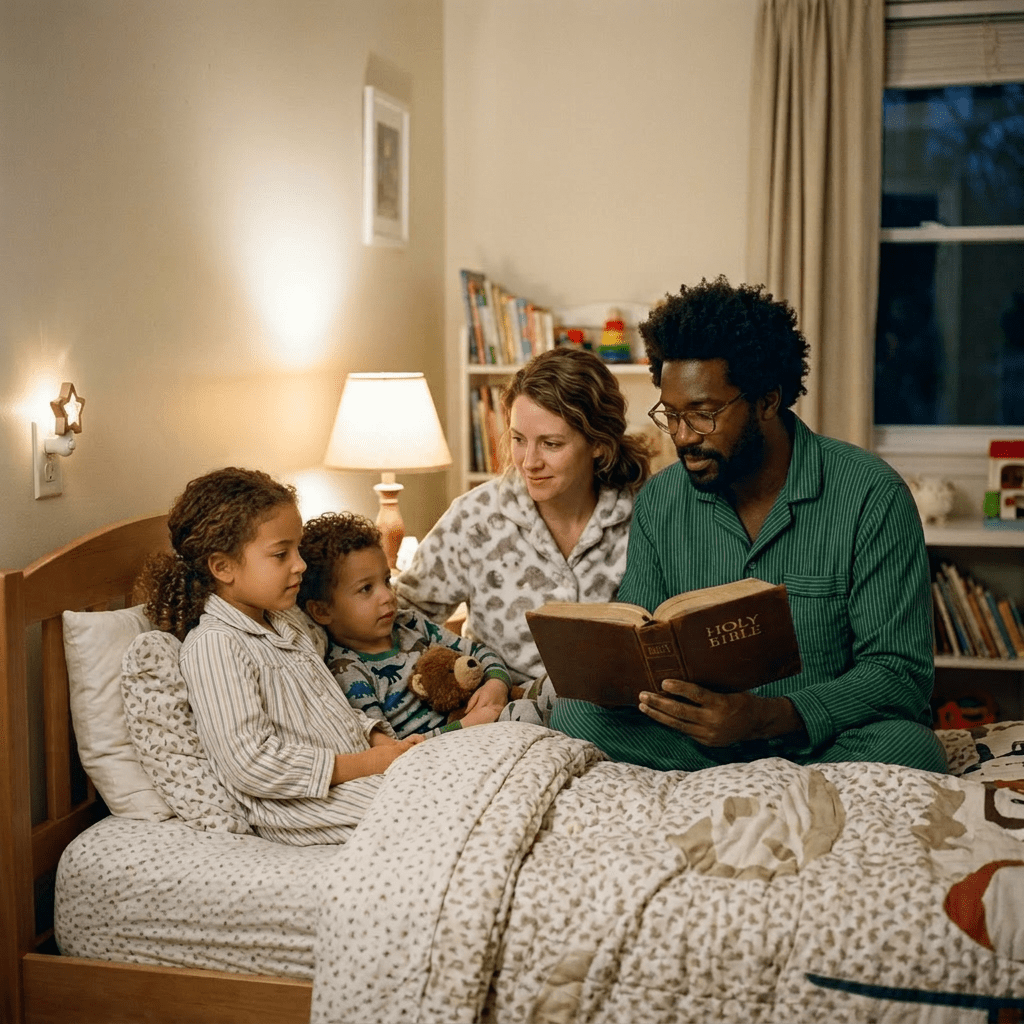
To my children, grandchildren, and future generations. This is what God would have us do.
The Bible has often been misrepresented by those who used it for selfish purposes, turning it into a tool of control through fear and intimidation. But the truth is simple: the Bible is a book of instruction. It teaches us how to live, how to treat one another, and how to walk with God through Jesus Christ. It offers guidance, hope, purpose, and a framework for living.
In Exodus 20:12, we are told, “Honor your father and your mother.” In Ephesians 6:4, we are given the balancing instruction: “Fathers, do not provoke your children to anger.” To understand these teachings, we must understand what honor means and what it means to provoke. When we clarify these concepts, we build a stronger foundation for understanding the relationship between parents and children. And when we understand Scripture correctly, it strengthens the bonds within a family rather than breaking them.
Respect
To honor others, we must first fully grasp what respect means. While honor and respect are closely related, they are not identical. Respect in action means showing consideration for others. This includes their feelings, rights, and traditions. For example, I can respect your dedication to your beliefs even if I do not share them or abandon my own. Respect in feelings, on the other hand, refers to having genuine admiration or appreciation for someone, as in admiring a person’s perseverance or kindness, because it resonates with you personally. Since we are speaking of parental relationships with children, we will speak from that perspective.
Honor
A child who honors their parents will live with integrity, carry the family name with dignity, and make choices that reflect positively on the family and themselves. Honor also means supporting parents in their old age. Jesus rebuked people who tried to avoid caring for their parents by hiding behind excuses, as seen in Mark 7:9-13. In real life, honoring parents might look like showing up to help when they don’t expect it, expressing gratitude just to have them in your life, or listening to their advice even as an adult. To honor them means to do what is morally right, bring pride to their name, and allow them the privilege of seeing your best self. Honoring your parents does not mean pretending everything was perfect. You honor them when you break generational patterns and choose better alternatives.
This is the moment I will share my personal story to help provide a deeper understanding. I met my mother when I was 18 or 19 years old. At first, we went through a difficult period of parental bonding in our relationship. However, when my mother became ill, I took care of her until her death, because she was my mother and I would not be here without her. I chose to honor her as my mother.
Provoke
Ephesians 6:4 advises parents, “Do not provoke your children to anger, but bring them up in the discipline and instruction of the Lord.” Let’s start with the definition of provoke. Oxford Dictionaries defines provoke in three ways:
- “stimulate or give rise to (a reaction or emotion, typically a strong or unwelcome one) in someone.”
- “stimulate or incite (someone) to do or feel something, especially by arousing anger in them.”
- “deliberately make (someone) annoyed or angry.”
Do not provoke your children to anger
This means avoiding actions that could provoke someone’s anger. This does not include acts of discipline, because a child may get angry when discipline is necessary. The Bible does not consider discipline an act of provoking anger. It tells you to bring them up in the discipline and instruction of the Lord.
When the Bible speaks of “the rod,” it is referring to guidance, correction, and steady direction, not harshness or harm. In biblical times, a shepherd used a rod to guide sheep, keep them on the right path, and protect them from danger. The rod was a tool of care, not cruelty. In the same way, teaching with the rod means giving children structure, boundaries, and consistent instruction. It means guiding them toward what is right and steering them away from choices that could harm their future. The rod represents loving correction that helps a child grow in wisdom and character.
The Rod as Punishment
For generations, many people were taught that “the rod” meant physical punishment, but that understanding is contrary to the teachings of the Bible. Scripture never presents the rod as a tool for beating or harming a child. Instead, it uses the image of a shepherd’s rod, a tool of guidance, protection, and steady direction. The rod represents teaching, correction, and keeping a child on the right path, not causing pain. When we understand the rod the way the Bible intended, we see that God’s instruction has always been rooted in love, wisdom, and care.
Ephesians 6:1–4 instructs parents to raise children in a way that reflects God’s character. The Amplified Bible makes it clear by advising parents not to provoke their children to anger, but to train them with guidance that reflects God’s heart. In other words, discipline is meant to shape, not to shame. It is meant to guide, not to harm. It is meant to build character, not break spirit.
Fathers are instructed not to provoke their children to anger. Instead, they are called to raise them with tenderness, loving guidance, and steady instruction that reflects the heart of God.
The Blessing of a Longer Life
The Bible says, “Honor your father and your mother, that your days may be long upon the land,” found in Exodus 20:12. This promise is both a blessing and a principle. When we honor the teachings that guide us toward what is right, we avoid the harmful paths that shorten life and damage our future. Honoring our parents by living with integrity, choosing what is good, and walking in the instruction of the Lord keeps us on steady ground. God’s command to honor our parents is not only about them; it’s His way of protecting, guiding, and blessing us with a life that’s fuller, wiser, and longer.
My Honor
Before I ever understood what it meant to build a home of my own, I lived in many that shaped me in different ways. Some homes offered comfort, and others offered lessons I didn’t expect, but each one shaped me in its own way. My children are grown now, and I honor them because the love and respect they give me reflect not only the mother I tried to be, but the many parents who helped shape me.