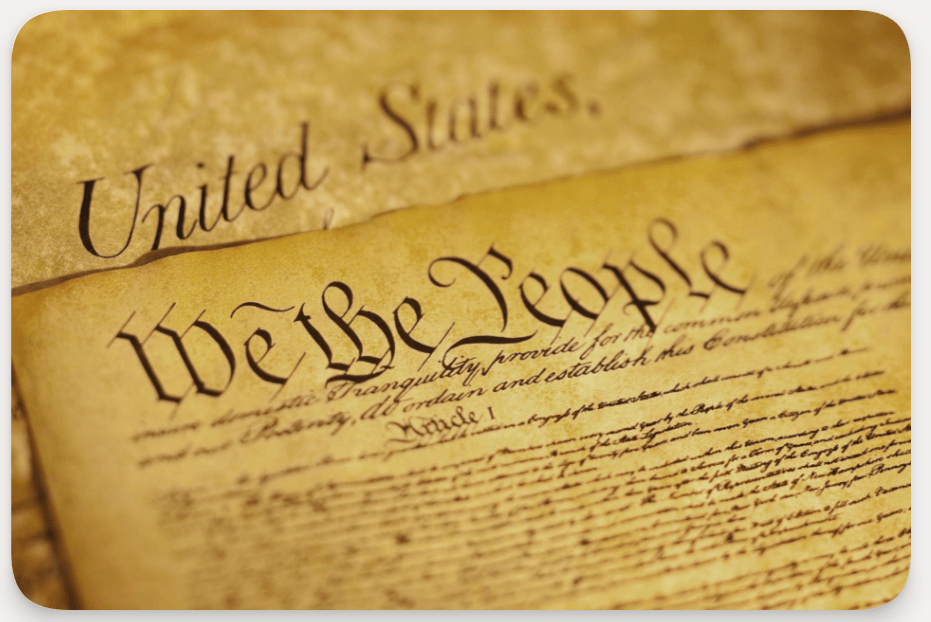
When the Founders wrote the original Constitution, they defined almost everything except the one thing that determines who belongs: citizenship. That silence wasn’t an oversight — it was a strategy. By refusing to define who counted as a citizen, they kept the door open to exclude whoever they wished, especially the very people whose labor built the country. It was a quiet kind of power, the kind that lets you decide later who gets to stay and who can be pushed out. Downright dirty, when you see it clearly. And yet that same blank space is what allowed the 14th Amendment to come in generations later and say, “Fine — since you didn’t define it, we will,” and finally write us into the nation we had already shaped with our hands, our lives, and our history.
The 14th Amendment finally did what the original Constitution refused to do: it defined citizenship plainly and for everyone. It declared that anyone born or naturalized in the United States is a citizen — no exceptions for race, no loopholes for states to wiggle through, no more deciding who belongs based on convenience or prejudice. It was a national reset, a line drawn in law that said, “This country cannot pick and choose its people.” For formerly enslaved families, it meant legal recognition of a humanity that had always been there. For the nation as a whole, it meant that citizenship was no longer a favor granted by the powerful, but a right rooted in birth, dignity, and equal protection under the law.
To become a lawful resident of the United States, a person must follow the legal immigration process: apply for a visa, pass background checks, meet eligibility requirements, and receive approval before entering or staying in the country. It is a structured system, not a casual one, because citizenship carries rights, protections, and responsibilities. Birthright citizenship, created by the 14th Amendment, belongs to the child born here — not the parent — because the law recognizes the child as fully under U.S. jurisdiction from the moment of birth. The parents’ legal status does not transfer automatically, because citizenship is not inherited through proximity; it is earned through a process. And that lawful path begins with entering the country only after approval — not before — because the process itself is what establishes your standing, your record, and your right to remain.
A humane immigration system would never tear families apart or chase people through the streets. Enforcement should be orderly, administrative, and rooted in responsibility — not fear. If a parent must be deported, they should have the unquestioned right to take their children and their household with them, because a family is a unit, not a bargaining chip. And if the goal is truly to remove criminals, the process should begin with those already in jail, where identities are known, and custody is secure. From there, the system can follow the administrative trail — visas, taxes, school records — instead of treating human beings like fugitives. A nation that upholds its laws with clarity rather than confusion shows its strength not through power, but through dignity, order, and respect for the families it serves.
In the end, a nation shows its character not by who it lets in or who it sends away, but by how it treats the people in its care while they are here.
 The Home of Blended Lineage Families